

Qualified Improvement Property (QIP): How Interior Renovations Can Unlock Faster Tax Deductions
Mar 19, 2026Interior renovations can create meaningful tax savings for commercial property owners when those improvements are classified correctly.
Qualified Improvement Property (QIP) allows many interior improvements to non-residential buildings to be depreciated over 15 years instead of the standard 39-year building life. This treatment became especially valuable after the CARES Act corrected a drafting error in the Tax Cuts and Jobs Act, restoring the 15-year recovery period and bonus depreciation eligibility for qualifying improvements.
For owners renovating offices, medical space, retail suites, or restaurants, QIP can significantly accelerate depreciation and improve near-term cash flow.
It is also an important component of broader renovation planning strategies. Commercial owners evaluating interior upgrades should consider how projects are structured from a tax perspective. CostSegRx discusses this further in smart tax planning strategies for commercial property renovations.
Key Takeaways
- Qualified Improvement Property generally includes interior improvements to non-residential buildings
- QIP may be depreciated over 15 years instead of the normal 39-year building life
- QIP may qualify for bonus depreciation depending on timing requirements
- Cost segregation studies help identify QIP and accelerate tax deductions
What Qualifies and What Does Not, as Qualified Improvement Property?
Qualified Improvement Property generally refers to improvements made to the interior portion of a non-residential building after the building was first placed in service.
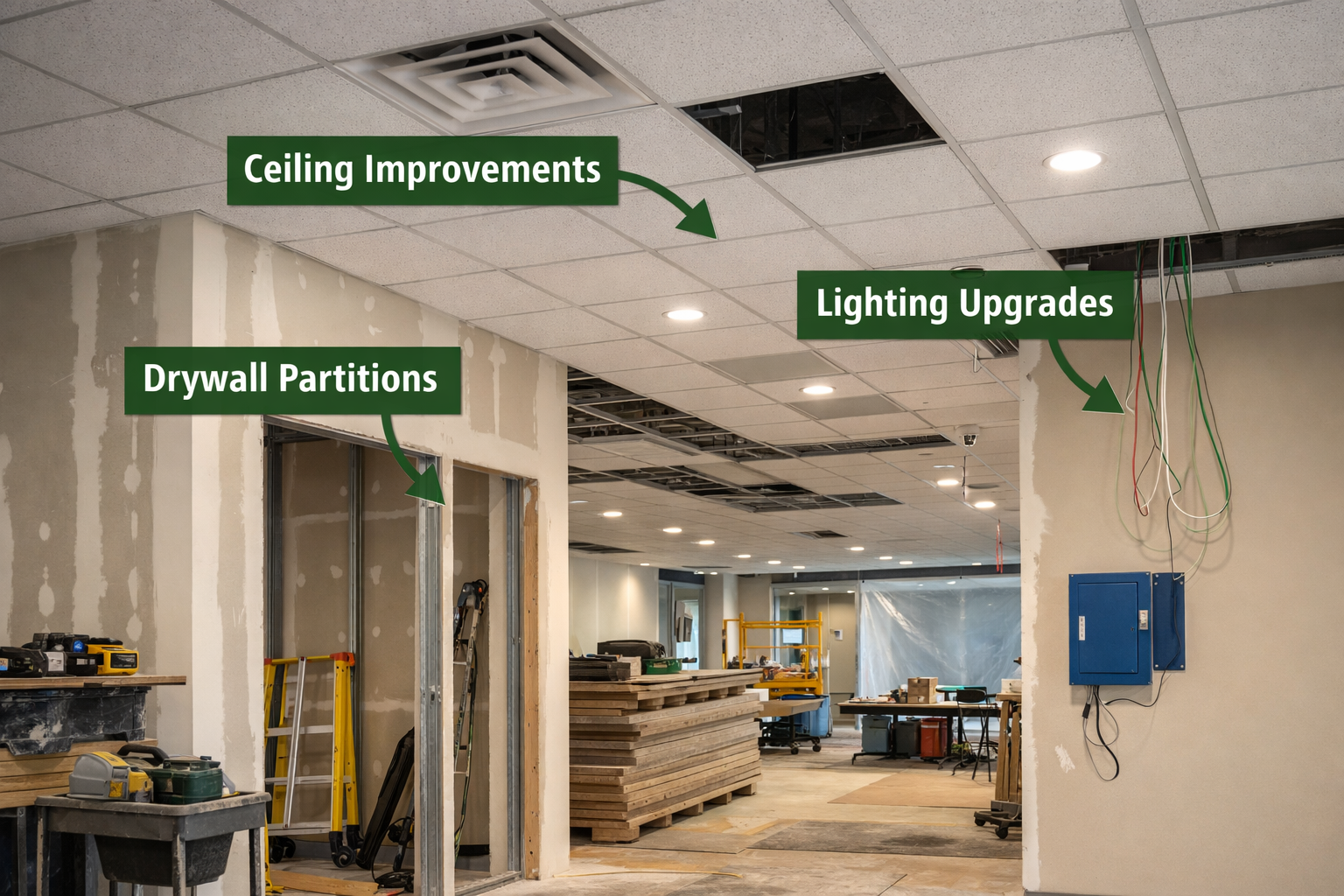
These improvements are commonly associated with tenant build-outs and interior renovations, such as drywall and partition walls, lighting upgrades, ceiling improvements, interior plumbing, and certain electrical improvements serving renovated spaces.
Because these upgrades occur within the existing building envelope, they may qualify for the shorter 15-year depreciation schedule rather than the standard 39-year life applied to commercial buildings.
However, several categories of improvements are specifically excluded from QIP treatment.
The following improvements generally do not qualify as Qualified Improvement Property:
- Elevators or escalators
- Building enlargements or expansions
- The internal structural framework of the building
In practice, renovation projects often include both qualifying and non-qualifying components, which makes proper classification essential.
Why the 15-Year Depreciation Matters
Commercial buildings are typically depreciated over 39 years, which significantly slows the recovery of renovation costs.
When interior improvements qualify as QIP, those costs may instead be depreciated over 15 years, allowing property owners to recover their investment much faster.
Accelerating depreciation improves near-term cash flow, reduces current tax liability, and frees up capital that owners may reinvest into property improvements, operations, or new acquisitions.
For investors and businesses regularly renovating commercial spaces, the difference between a 39-year schedule and a 15-year schedule can materially affect the financial performance of a property.
Certain industries may also benefit from additional accelerated depreciation strategies. For example, manufacturers investing in new facilities may qualify for Qualified Production Property (QPP), which can allow 100% depreciation for certain production buildings under recent legislation. Learn more in our guide to Qualified Production Property and 100% depreciation.
How Bonus Depreciation Applies to QIP
Because QIP is generally classified as 15-year MACRS property, it may qualify for bonus depreciation under Section 168(k) when the applicable requirements are met.
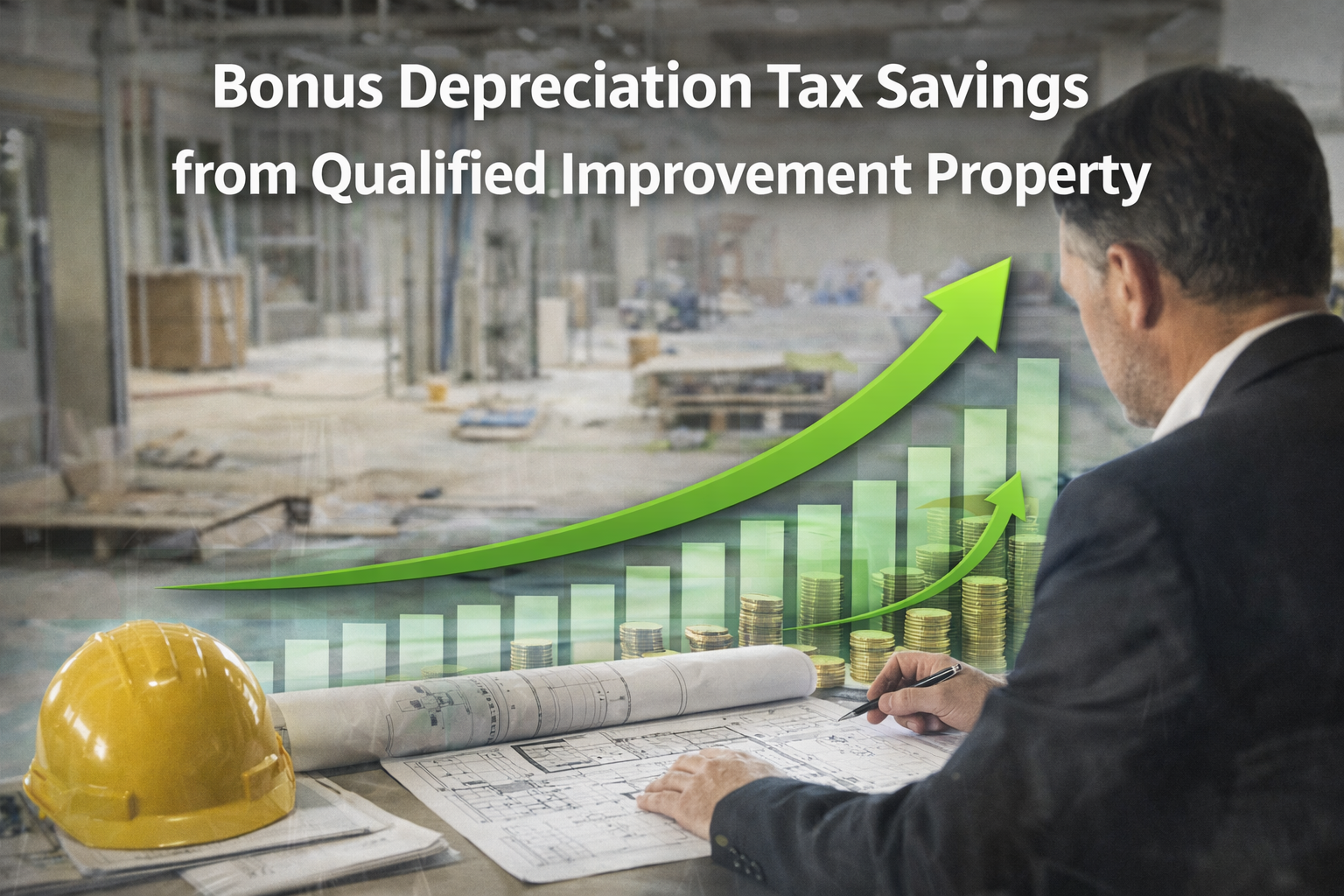
Bonus depreciation allows businesses to deduct a significant portion or potentially all of qualifying improvement costs in the year the property is placed in service rather than depreciating those costs over many years.
Recent legislation expanded these benefits again. Qualified property acquired and placed in service after January 19, 2025 may qualify for 100% bonus depreciation, while certain earlier 2025 property may still fall under prior-law percentages depending on timing requirements.
For commercial renovation projects, these rules can significantly accelerate cost recovery.
Why a Cost Segregation Study Is Critical for Maximizing Cash Flow
Determining whether renovation costs qualify as QIP and separating them from non-qualifying building components typically requires detailed analysis.
Without a cost segregation study, many interior improvements are grouped into the building’s 39-year structural category, delaying depreciation deductions and reducing near-term cash flow.
An engineering-based cost segregation study evaluates renovation costs, construction documentation, and building systems to properly classify assets into shorter depreciation categories such as:
- 5-year property
- 7-year property
- 15-year property including Qualified Improvement Property
By accelerating depreciation, property owners may increase early-year deductions and improve after-tax cash flow generated by the property.
CostSegRx performs engineering-based cost segregation studies designed to identify these opportunities while aligning with IRS guidance. Our team analyzes tenant improvements, renovation costs, and construction documentation to ensure assets eligible for accelerated depreciation are properly classified.
For commercial property owners completing interior renovations, that analysis can significantly increase early-year tax deductions and free up capital for reinvestment.

Do you have a question about Cost Segregation?
Let us know how we can help
We hate SPAM. We will never sell your information, for any reason.

